Category: Windows

  • Fixes for AutoPlay Dialog Box Not Appearing When Plugging in a Removable Device

    Whenever you plug a removable device such as a USB flash drive or hard drive into your computer, the default action in Windows will pop up a dialog box asking what you want to do with the newly inserted device. This is known as Autoplay and will give you options such as playing a music CD, watching a DVD, burning a blank disc or simply opening the drive in Windows Explorer to name a few things. There are many more options available and 3rd party applications can also add to this to give even more options.

    By default Windows will allow the Autoplay feature to pop up on all drive types apart from those recognized as network drives or any which it can’t correctly identify. This includes any removable drives (USB flash etc), fixed drives, RAM disks and CD-ROM (CD/DVD/DVD-RAM/BD-R) drives that are inserted. Sometimes though, this function might not show when you want it to because of a problem with Windows or a piece of 3rd party software has changed the settings without your knowledge.

    autoplay in windows

    If you want to get this back when you plug in a device such as a USB stick, it can range from a simple fix to something a bit more difficult such as some wrong registry settings.
    (more…)

  • About $Recycle.bin, Recycler and System Volume Information Folders in Windows

    As you might expect, there are many files and folders hidden away in Windows that deal with important tasks such as keeping the system running or allowing certain features to function. A couple of examples of this are Hiberfil.sys and Pagefile.sys that reside in the root of your C drive.

    You have to enable the show hidden files and protected operating system files settings in Control Panel Folder Options for these and other files to become viewable. More folders in the root of C which also become visible after unhiding are $Recycle.bin or Recycler and System Volume Information. But just what are these folders for?

    The first thing about hidden files and folders in general is that they’re usually not made visible for a reason, which is often a sign that you’re not supposed to play around with them. But also, like many things in Windows, if something isn’t behaving correctly or the behaviour looks odd, you might want to have a closer look.

    What is System Volume Information folder

    So what are the $Recycle.bin, Recycler and System Volume Information folders all about?
    (more…)

  • How To Access Send To Folder in Windows 7 and Vista

    If set up to your preference, the Windows Send To menu can be a very useful addition to Windows Explorer. This feature has been around since Windows 98 providing a convenient way for Windows users to easily perform simple file operations and send files or folders to other locations such as the Desktop and Documents folder, third party applications, and even to other drives or devices via Bluetooth or CD/DVD writers. A few default locations are provided such as Compressed (zipped) folder, Desktop, Documents, Fax recipient, Mail recipient and attached drives that you can send to, and these options will likely grow after installing third party applications.

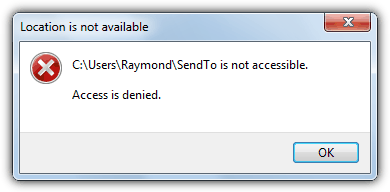
    If you find that the Send To options have too many useless items for your liking and you would like to manually remove some of them from the list, or even add your own custom Send To shortcuts, fortunately you can easily access the Send To folder just like any other Windows folder. In Windows XP is easy to get to and found at “C:\Documents and Settings\{username}\SendTo”. When it comes to Windows 7, 8 or Vista, if you look inside the user’s folder, you will find a SendTo shortcut but double clicking on it will prompt the error message “Send To is not accessible. Access is denied”.

    SendTo Start Menu Access Is Denied

    The Send To in Users is hidden by default and to see it you will first need to select the “Show hidden files, folders, or drives” option from the View tab found in Control Panel -> Folder Options. So why are you getting the Access denied error message when trying to access the SendTo folder?
    (more…)

  • 5 Methods to Shutdown Remote Computers from LAN or WAN

    It is possible to turn on a remote computer by using a 3rd party Wake On LAN (WOL) tool that is able to send a magic packet. Logically the computer will have to be plugged in to a power point so that there’s electricity to boot up the computer and keep the computer running. Turning off or shutting down a remote computer is also possible and it is actually much easier since the computer is already booted up and assumed is connected to the network.

    There are a few different methods to remotely shut down, restart or log off a user from the computer, each with its own pros and cons.
    (more…)

  • Backup Files from a Non Booting Windows to LAN or FTP Using a Live CD

    One situation everyone dreads is when their system goes down completely and you’re unable to get into Windows at all due to a severe virus infection or file corruption etc. The system has become completely unbootable and there is no way to get in, even through a System Restore offline or a Repair Install. It’s then you reach for backups, and if you have very recent backups, it might not be such a problem. But if you have no backups to hand, such as a Windows System Image, or they’re badly outdated, there could be Megabytes or even Gigabytes of non backed up data you need to get off the computer before a reinstall.

    These days it’s not too difficult to get data from a dead Windows because most live Linux CD’s have built in support for reading Windows partitions. They also support USB and writing to CD/DVD so getting your data off shouldn’t be too hard. Simply insert your USB flash drive or portable hard drive and off you go. And of course, let’s not forget our old friend Hiren’s Boot CD that can also write to USB or CD while doing so from a more familiar Windows environment.

    Bigger problems arise if you don’t have room on other internal hard drives or USB storage space, and no way to write to CD/DVD. Then you’re left with either pulling the drive and plugging it into another machine, or this solution which is to move your files off via the network. Transferring files via network isn’t difficult as long as you have the connection, then it can be used to connect to another Windows PC, or an FTP server and you can even create your own FTP server.
    (more…)

  • Is it Safe to Delete Hiberfil.sys and Pagefile.sys?

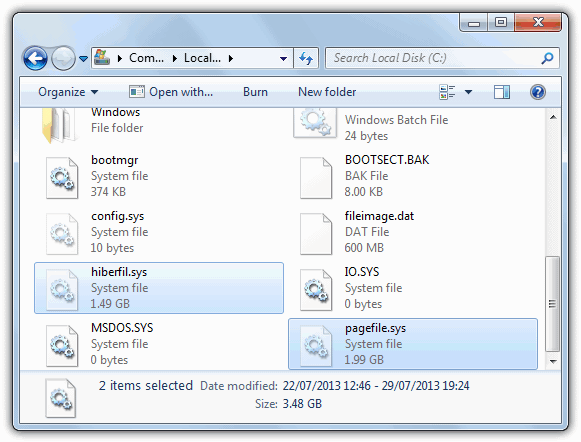
    Most computer users with some form of knowledge quite like to keep their system running smoothly, and that includes cleaning out junk and old privacy files with tools like CCleaner to keep the hard drive clean from useless data. While looking around the root of your C drive, a couple of files you might come across which will be quite big in size are hiberfil.sys and pagefile.sys. You won’t be able to see them without showing hidden files in Windows folder options first, using a file manager or typing “C:” into the address bar to show hidden files in a web browser.

    The size of these files actually will depend entirely on the amount of physical memory (RAM) there is in your computer because they are set automatically by Windows according to how much you have. If you use a large capacity hard drive for your Windows partition this won’t be a problem. But if you have an SSD or a smaller hard drive, this can become an issue when space is at a premium and these files are consuming several Gigabytes between them taking up a large percentage of available space.

    Delete hiberfil.sys

    So, just what are the hiberfil.sys and pagefile.sys files and how can I remove them from my system? How safe is it to delete hiberfil.sys and pagefile.sys?

    Here are the answers to the questions above.
    (more…)

  • How to Dual Boot Windows 7 and XP

    Even though many computer users will have moved on from Windows XP and installed Vista or Windows 7 (or 8), there’s still no doubt that a lot of us still love to have XP around because it’s still a great operating system. The problem is obviously that you can’t get XP installed on a laptop or desktop from a manufacturer and if you want to put it onto your own computer, you will have to do it yourself.

    Because support is nearly at an end for XP, it doesn’t make sense to replace your current Windows 7 or Vista install, but there’s no problems if you want to use your copy of XP alongside Windows 7 in a dual boot configuration, and have the best of both worlds.

    There is a problem though when you want to dual boot between Windows 7 and XP. And that is when you install XP after installing Windows 7, it will overwrite the existing boot loader meaning you can only boot to XP, you cannot put Windows 7 into the XP boot menu. You can however, do it the other way around and put XP into the Windows 7 boot menu, which is what you have to do for both your operating systems to run alongside each other, and is what we’re going to guide you through in this tutorial.
    (more…)

  • Deltree Command Replacement in Windows 7, Vista and XP

    I was recently required to create a batch file to automatically remove a directory as well as all of its sub-directories and contained files because the excellent Remove Empty Directories tool doesn’t support command line functions. I remembered many years ago when I was using Windows 98, I could use the built in “deltree” command to delete a folder and everything in it.

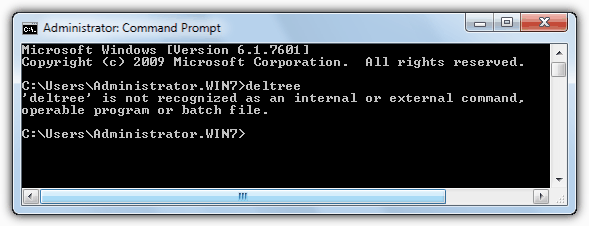
    I launched a Windows command prompt , and typed “deltree /?” to display all the commands for deltree because I couldn’t remember what its parameters are. It was quite embarrassing to see the error message “deltree is not recognized as an internal or external command, operable program or batch file.” The deltree command is no longer used in Windows 2000 and Windows XP, Vista or Windows 7, as the last operating system supporting the deltree command was Windows ME.

    deltree is not recognized

    After a little searching, I found the deltree command replacement for Windows 2000, XP, Vista and Windows 7.
    (more…)

  • How Effective is Blocking Websites using HOSTS file?

    A HOSTS file is used to manually force map a hostname to an IP address without relying on a DNS service. The HOSTS file is found on every operating system and for Windows, it is located at Windows\System32\drivers\etc\ folder, just with the filename as HOSTS without an extension. By default the HOSTS file doesn’t contain any mappings and most computer users don’t even need to touch the file. The below image is how the default Windows HOSTS file looks like.

    Windows Default HOSTS file

    However, web developers who are developing websites locally from their computer may find it useful because they can download the whole website’s code to their computer, map the domain name to their computer’s IP address and immediately start editing without worrying about the absolute URLs. Another common usage of HOSTS file is to block websites including advertisements and web trackings by mapping it to a localhost which is 127.0.0.1 or to a non-routable 0.0.0.0 IP address. Other than using the HOSTS file for good purposes, some malware uses it to block the infected computers from accessing security based websites.

    There are times when you need to check the HOSTS file, for example when you suddenly find a website inaccessible from a particular computer while it loads perfectly fine on others. Here is how to view and edit the HOSTS file in Windows.
    (more…)

  • 5 Ways to Identify Which Service or Driver Failed During System Startup

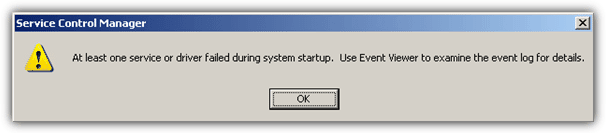
    If you’re still working in an environment with older operating systems such as Windows NT, 2000 or 2003 being used, one of the annoying error messages they can popup is a dialog box during or just after Windows has booted. It will have a message with “At least one service or driver failed during system startup. Use Event Viewer to examine the event log for details”. This can happen when software or drivers don’t get uninstalled correctly or the startup entry isn’t removed from services.

    It’s usually not a big problem because when you click the OK button, the error message will go away and you won’t be bothered by this error message again until you restart Windows. The problem does need investigating though because it could be related to system services or drivers which have an issue and are affecting functions such as the network or causing system performance or instability.

    At least one service or driver failed during system startup

    Unfortunately, there’s no 100% one click fix for this error and the only way you can really find out the cause is by manually checking which service or driver has failed to load through some detective work. We can only guide you on where to check for the fault because fixing it will depend entirely on what has failed and your Windows software configurations etc.

    Here are a few ways you can help identify which service or driver failed during system startup.
    (more…)

  • 7 Ways to Easily Identify SVCHOST.EXE Service Name

    Other than commonly using the Windows Task Manager to end a hung task or process, it is also very useful to quickly check the active running programs on your computer. You may noticed that there is quite a number of svchost.exe listed in the processes tab and is probably wondering what is it and how come there are so many of them running? Basically SVCHOST is used by Windows to run multiple Windows services and the reason why Windows services uses svchost.exe to run is because they are in DLL files and not an independent executable (.EXE) file. If you didn’t know, Windows Services is one of the startup method in Windows where it can automatically run in background without even requiring the user to login to their account in Windows, unlike other startup method where the programs will only run when the user is logged in to Windows.

    svchost.exe in task manager

    Normally users would ignore the existence of svchost.exe listed in the Windows Task Manager and only look for some dubious image name. This is where some malware takes advantage by using the file name as svchost.exe, hoping that you would not notice its presence. One easy way to find out a suspicious svchost.exe is by looking at the user name that is used to run the svchost.exe. If the svchost is ran by SYSTEM, NETWORK SERVICE or LOCAL SERVICE, then it should be legitimate but if it is ran under YOUR user account, then you need to investigate if the svchost.exe file is from another location than C:\Windows\System32\. If you’d like to identify the services that are ran behind the svchost.exe, here are 7 ways to do it.
    (more…)

  • Mac OS X Mountain Lion Theme On Windows

    Although Windows has dominated the operating system market for many years already, there is still quite a number of people that prefers Mac over Windows because of advantages such as stability, lack of virus, secure because it is built from Unix and of course the Mac itself looks beautiful. The operating system known as OS X has always looked awesome too and when Windows Vista was released, you would have heard numerous times that a lot of the newer Windows interface is copied from Mac OS X. Unfortunately you cannot just download and install Mac OS X on a non-Apple PC unless you are willing to use some of the hacks that can be found on the Internet.

    One of the best and easiest way to have a feel of the latest Mac OS X Mountain Lion on a non-apple computer is to simply install a theme. This way you can still be familiar with the computer usage as it is still Windows except the interface resembles Mac OS X Mountain Lion.
    (more…)

  • How To Install USB Mass Storage Device on Windows 98

    Although Windows 98 has been out of general circulation for well over a decade now, it might come as a surprise to some people that it’s still actively in use, especially in a business or specialized environment for running old software. There is actually a third party Service Pack for Windows 98 Second Edition which is still being updated well into 2013, even though Microsoft ended their support for Windows 98 on the 11th of July 2006! Obviously, hardware support from all major manufacturers has ended years ago so if you or your company still run Windows 98 in some capacity, it’s incredibly difficult to find compatible hardware and software for it.

    As an example, a company I did some work for a while back purchased a Kingston Data Traveler USB flash drive for backup purposes on a computer that’s still running Windows 98.  The problem is, due to some obsolete software that needs to run on Windows 98, the computer cannot be upgraded to newer versions of Windows such as 8, 7, Vista or even Windows XP. I’ve tried compatibility mode on Windows XP and it doesn’t work either, so it’s either upgrade the software or continue using Windows 98. Updating the old software is very expensive, so the decision was to stay with Windows 98 and try to source parts that can support this ageing operating system.

    Kingston USB flash drive

    The immediate problem was getting the flash drive to work. Windows 98SE is actually not too bad at handling mass storage drivers for a USB storage device IF you have a driver disc that accompanied it or a download is available. 98SE doesn’t come with a generic mass storage driver that would install support for all standard USB storage devices like newer Windows versions, so not every device you insert will simply get recognised. Predictably, Kingston offers no support for their devices in Windows 98 so no driver can be installed to pick up the flash drive.
    (more…)

  • 6 Ways To Change the Windows Folder Icon To Another Icon

    Windows works by using a file and folder structure and specific files can be stored in their own dedicated folders. Most files that run Windows are stored in the Windows folder while installed software is mostly stored in Program Files. Personal data will likely be stored in folders like Videos, Documents, Downloads, Music, etc. Most users know what the personal data folders are for and use them accordingly.

    You can naturally create your own folders and have a custom structure that suits your needs. Keeping your files well ordered and categorized is ideal for efficiency and helps to keep things more organized. Another option to help visually locate certain folders is making them have different colored or different looking icons to the standard folder. A standard folder in Windows is yellow and it’s helpful to quickly tell one folder from another by making it look different.

    Here we’ll show you some ways to change the folder icon for one individual icon at a time, multiple icons at once and even to change the system default folder icon to another icon. Manual and automatic solutions are available, all work for Windows Vista and above.
    (more…)

  • How To Burn Downloaded Windows Vista to DVD or USB

    We might almost be on the latest version 10 of Microsoft Windows, but there are still a lot of people around that have Windows Vista installed on their machines, especially laptops. Although it received criticism in the early days, in reality a fully patched and updated Windows Vista isn’t that bad and is still a perfectly usable operating system. Don’t forget, Windows 7 and 8 are in part based on Vista so it did in fact get a number of things right.

    Whether you purchased your copy of Windows Vista direct from the Windows Marketplace or it came pre-installed on your machine, the chances are you won’t have a bootable DVD around with clean Vista installation files on it. The Marketplace version was available as a “Digital Locker Download” which gave you access to download 3 files, 2 Windows Image Format (WIM) files and an executable. Unlike Windows 7 and 8 which can be downloaded direct from Microsoft as an ordinary ISO file, Vista needs a bit of work to create an ISO image which you can burn and then install from.

    Users who received Windows Vista already installed on their machine will likely only have a rather old and bloated recovery partition to fall back on. And as you hopefully still have a readable Vista product key on a sticker on the casing of your computer, it’s useful to have the facility to perform a clean install once in a while. If you have a legitimate Vista product key, it doesn’t take too much effort to download the 3 files concerned and convert them into an ISO which can be burned or written to USB and Vista installed from.

    Sadly Microsoft never seemed to release these files with Service Pack 2 integrated so that has to be installed manually after you install Vista. The following downloads are direct from Microsoft’s official distribution partner Digital River, you need the 3 files from either version to create the ISO file. Unfortunately, there are very few languages available, so here are just the English versions. These distro’s contain the following versions of Vista:

    Starter, Home Basic, Home Premium, Business, Ultimate, Home Basic N, Business N
    (more…)